
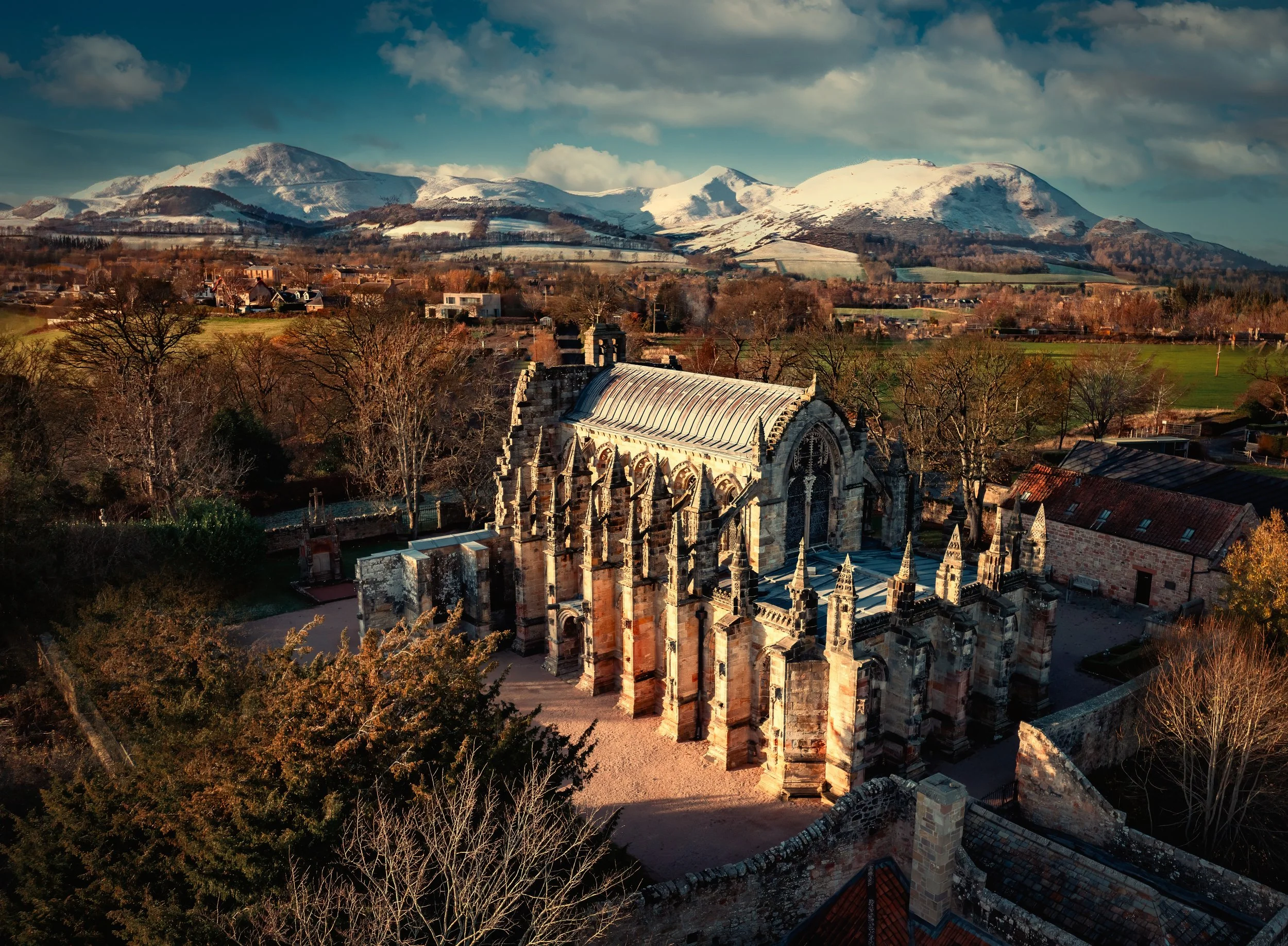
Rosslyn Chapel, officially the Collegiate Church of St Matthew, is a 15th‑century chapel in the village of Roslin, just south of Edinburgh, renowned for its extraordinarily intricate stone carvings and air of mystery. Founded in 1446 by Sir William (William St Clair), third and last Prince of Orkney, it was intended as a grand collegiate church but was never fully completed, leaving the richly decorated choir as its most striking surviving part. Over the centuries it fell into partial disuse after the Reformation, suffered periods of neglect, and was even used as stables by Cromwell’s troops, yet later restorations in the 19th century brought it back into use as an active place of worship. Today, visitors are drawn not only by features such as the famous Apprentice Pillar and dense symbolic carvings linked in popular imagination to the Knights Templar and the Holy Grail, but also by its role in novels and films like The Da Vinci Code, which has amplified its reputation as one of Scotland’s most evocative and enigmatic buildings
Rosslyn Chapel, officially the Collegiate Church of St Matthew, is a 15th‑century chapel in the village of Roslin, just south of Edinburgh, renowned for its extraordinarily intricate stone carvings and air of mystery. Founded in 1446 by Sir William (William St Clair), third and last Prince of Orkney, it was intended as a grand collegiate church but was never fully completed, leaving the richly decorated choir as its most striking surviving part. Over the centuries it fell into partial disuse after the Reformation, suffered periods of neglect, and was even used as stables by Cromwell’s troops, yet later restorations in the 19th century brought it back into use as an active place of worship. Today, visitors are drawn not only by features such as the famous Apprentice Pillar and dense symbolic carvings linked in popular imagination to the Knights Templar and the Holy Grail, but also by its role in novels and films like The Da Vinci Code, which has amplified its reputation as one of Scotland’s most evocative and enigmatic buildings