
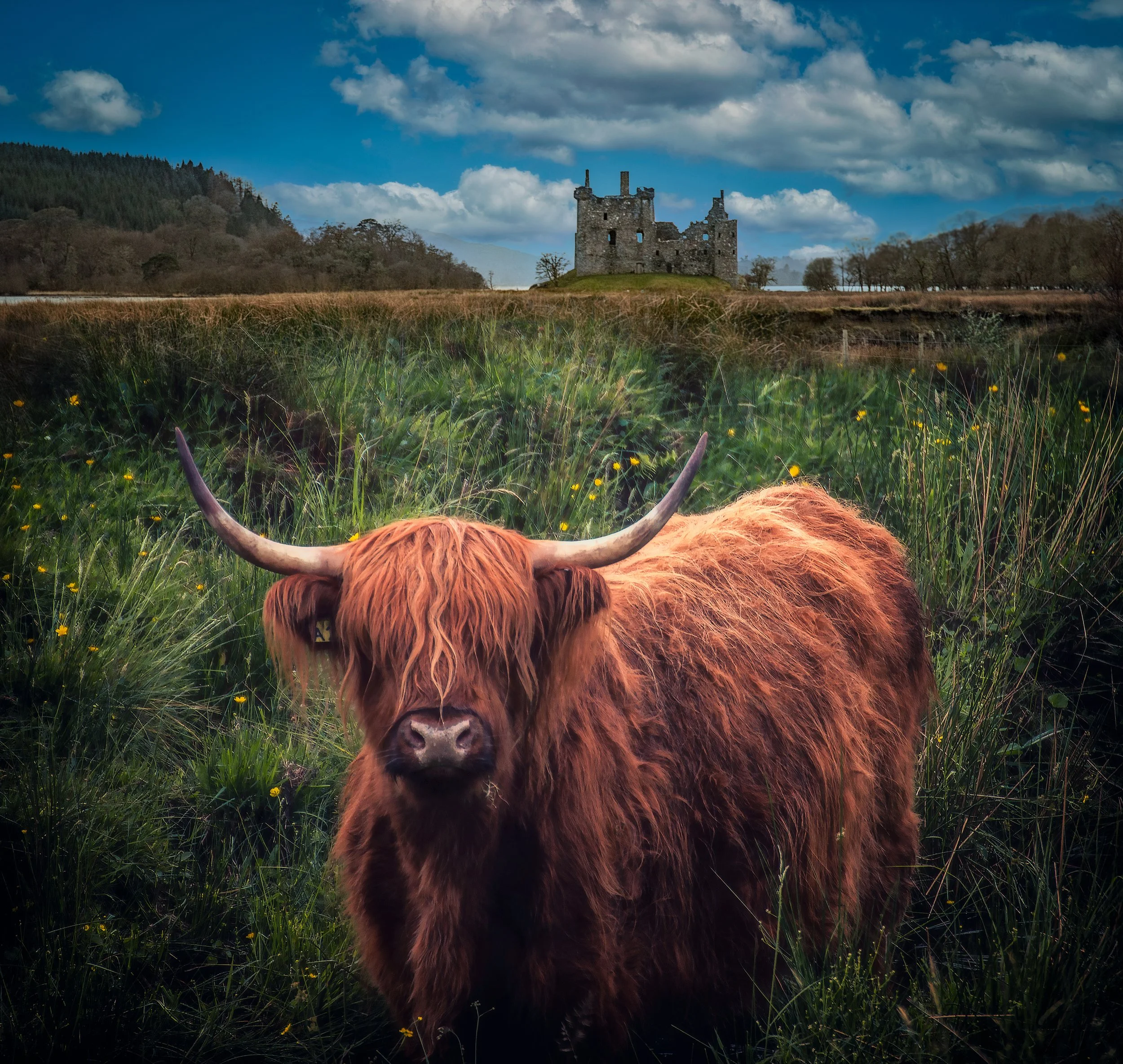
Highland cows, or “heilan coos,” often graze in the lush parklands and fields that surround many Scottish castles, their shaggy coats and sweeping horns mirroring the wild romance of the landscape. Around places like Blair Castle, in Perthshire, Kilchurn in Loch Awe or Inveraray Castle in Argyll, herds wander against backdrops of turrets, stone walls, and distant hills, turning a simple farm scene into something almost storybook. Bred for the harsh climate of the Highlands and now beloved as icons of Scotland, these gentle cattle add warmth and character to ancient strongholds that once guarded glens and passes. Visitors who come in search of history and architecture often leave with just as many photographs of the cows as of the castles themselves, captivated by the contrast between weathered stone and the animals’ soft, windswept hair.
Highland cows, or “heilan coos,” often graze in the lush parklands and fields that surround many Scottish castles, their shaggy coats and sweeping horns mirroring the wild romance of the landscape. Around places like Blair Castle, in Perthshire, Kilchurn in Loch Awe or Inveraray Castle in Argyll, herds wander against backdrops of turrets, stone walls, and distant hills, turning a simple farm scene into something almost storybook. Bred for the harsh climate of the Highlands and now beloved as icons of Scotland, these gentle cattle add warmth and character to ancient strongholds that once guarded glens and passes. Visitors who come in search of history and architecture often leave with just as many photographs of the cows as of the castles themselves, captivated by the contrast between weathered stone and the animals’ soft, windswept hair.