
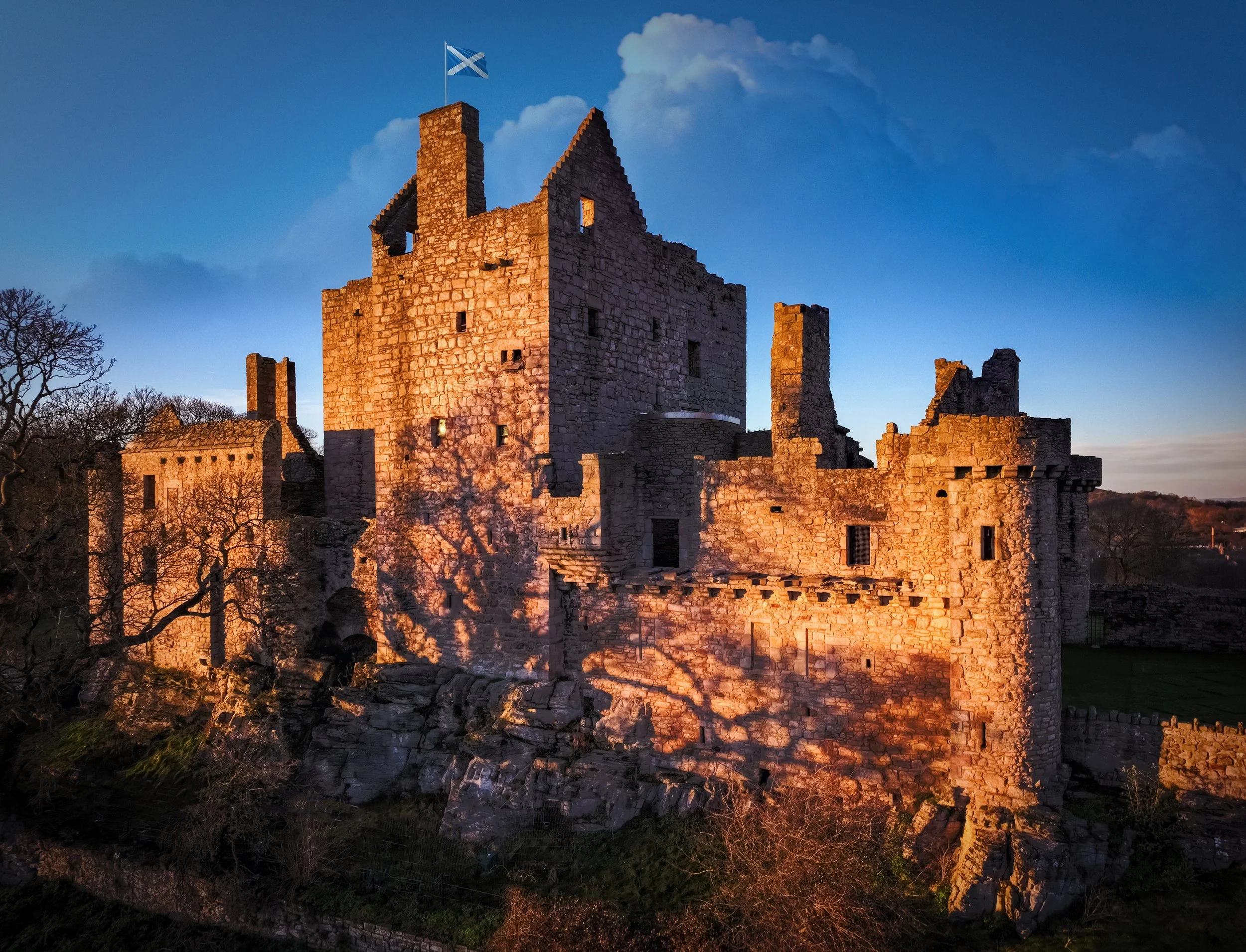
Craigmillar Castle is a remarkably well-preserved medieval ruin on a low hill just southeast of Edinburgh’s Old Town, long known as the city’s “other castle.” Begun by the powerful Preston family in the late 14th century as an L‑plan tower house with walls almost 3 metres thick, it later grew into a complex of courtyards, gardens, and defensive walls that blended strong fortification with comfortable domestic space. The castle became a favoured retreat for Mary, Queen of Scots in the 1560s, and it was here that some of her supporters discussed the notorious “Craigmillar Bond,” a plot concerning her husband, Lord Darnley. Burned during the English attack on Edinburgh in 1544 but swiftly repaired, Craigmillar passed from the Prestons to the Gilmour family in the 17th century, before eventually falling into picturesque ruin amid its pastureland and surviving yew-framed courtyard. Today visitors can still climb its atmospheric tower, wander through echoing halls and cellars, and look out across the city to Arthur’s Seat, tracing more than six centuries of Scottish political and architectural history in stone.
Craigmillar Castle is a remarkably well-preserved medieval ruin on a low hill just southeast of Edinburgh’s Old Town, long known as the city’s “other castle.” Begun by the powerful Preston family in the late 14th century as an L‑plan tower house with walls almost 3 metres thick, it later grew into a complex of courtyards, gardens, and defensive walls that blended strong fortification with comfortable domestic space. The castle became a favoured retreat for Mary, Queen of Scots in the 1560s, and it was here that some of her supporters discussed the notorious “Craigmillar Bond,” a plot concerning her husband, Lord Darnley. Burned during the English attack on Edinburgh in 1544 but swiftly repaired, Craigmillar passed from the Prestons to the Gilmour family in the 17th century, before eventually falling into picturesque ruin amid its pastureland and surviving yew-framed courtyard. Today visitors can still climb its atmospheric tower, wander through echoing halls and cellars, and look out across the city to Arthur’s Seat, tracing more than six centuries of Scottish political and architectural history in stone.